An accessible kiosk that connects everyone to the right bus in real time.
Brantford Transit Information Kiosk
COMPANY
Workforce Planning Board Of Grand Erie
ROLE
Project Lead | Research Lead
EXPERTISE
UX/UI Design
YEAR
2024
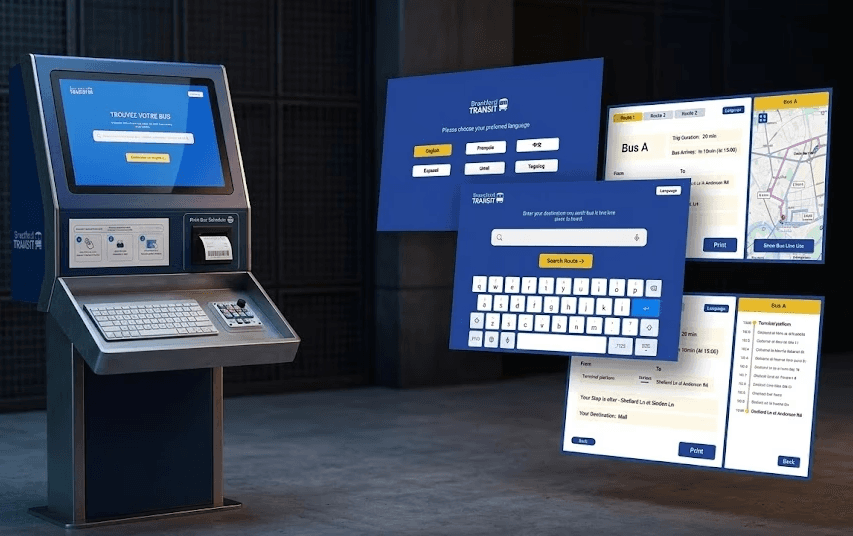
Generated using Gemini Pro, using real high fidelity prototype images
Background
The client’s brief for a "Smart and Safe Downtown Brantford" provided a broad scope of areas to improve across the city. While most teams focused their solutions on physical security like cameras and lighting, we chose to explore mental safety.
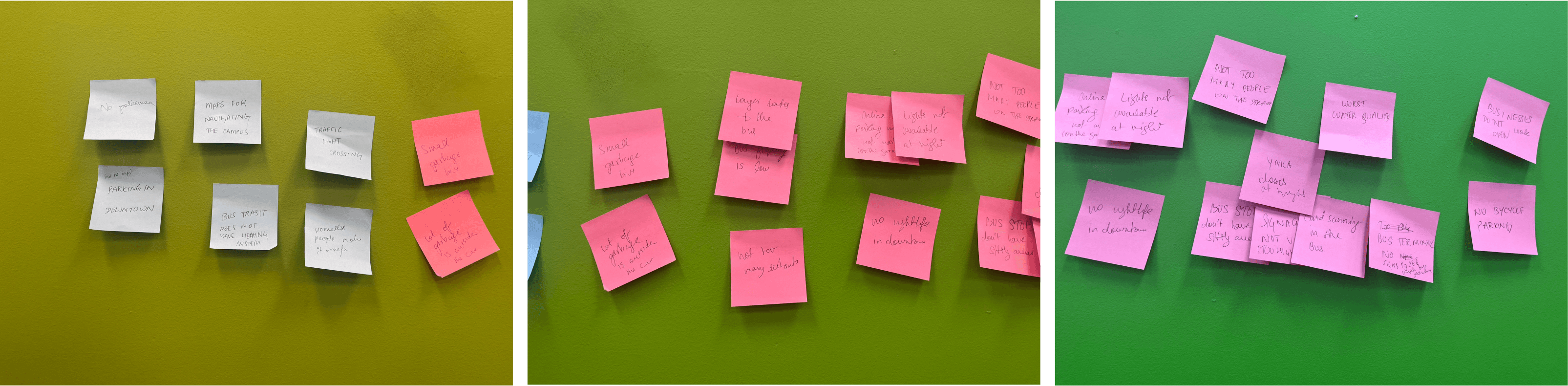
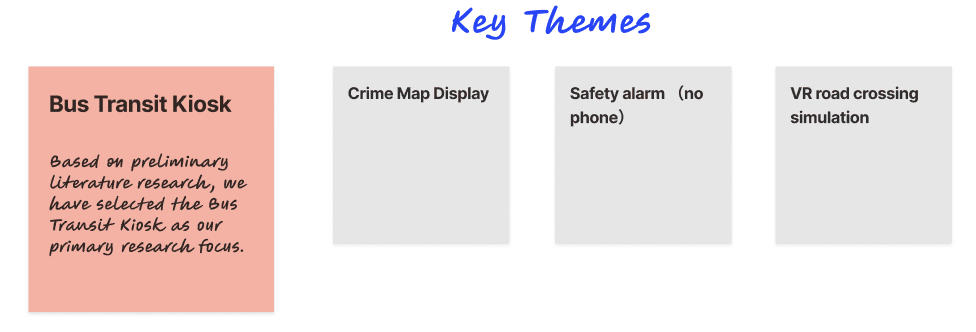
We narrowed our focus to the Brantford Transit terminal a primary hub where students, especially international newcomers, often find navigating the bus system intimidating.
For us, true safety went beyond physical security; it meant having the peace of mind and confidence of knowing exactly how to get where you need to go.
The Why
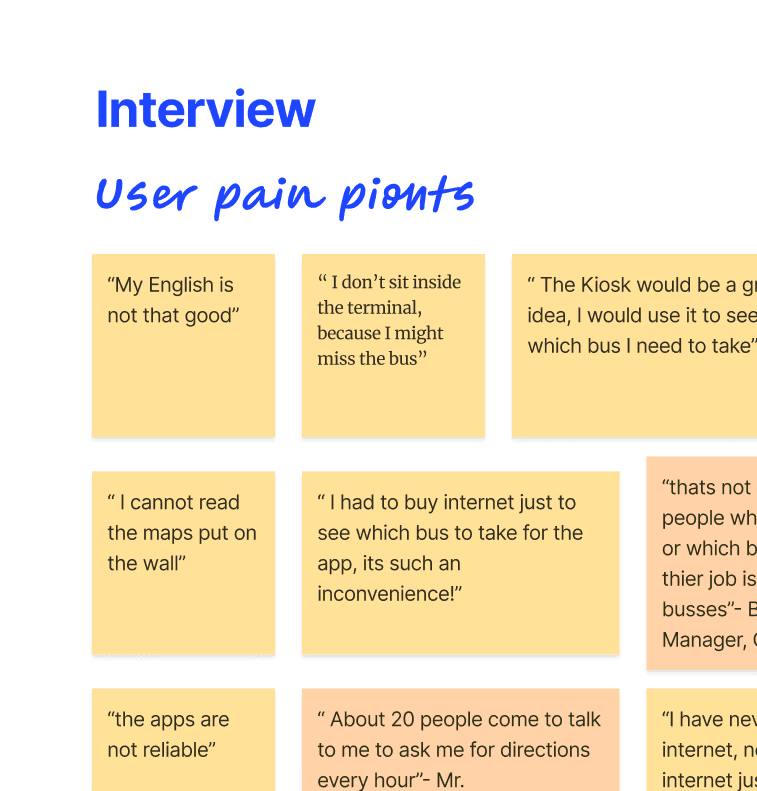
Phone Dependency & Costs: Static A4 schedules lack real-time updates, forcing users to buy expensive mobile data plans just to use transit apps.
Unpredictable Waits: Passengers wait outside in bad weather because they fear missing their bus if they wait inside the terminal.
Inaccessible Info: Hard-to-read wall maps and language barriers leave users confused, forcing transit staff to constantly answer wayfinding questions.


The Problem Statement
Commuters face confusion & delays. No real-time info makes navigation hard, especially for seniors & newcomers.
The Who
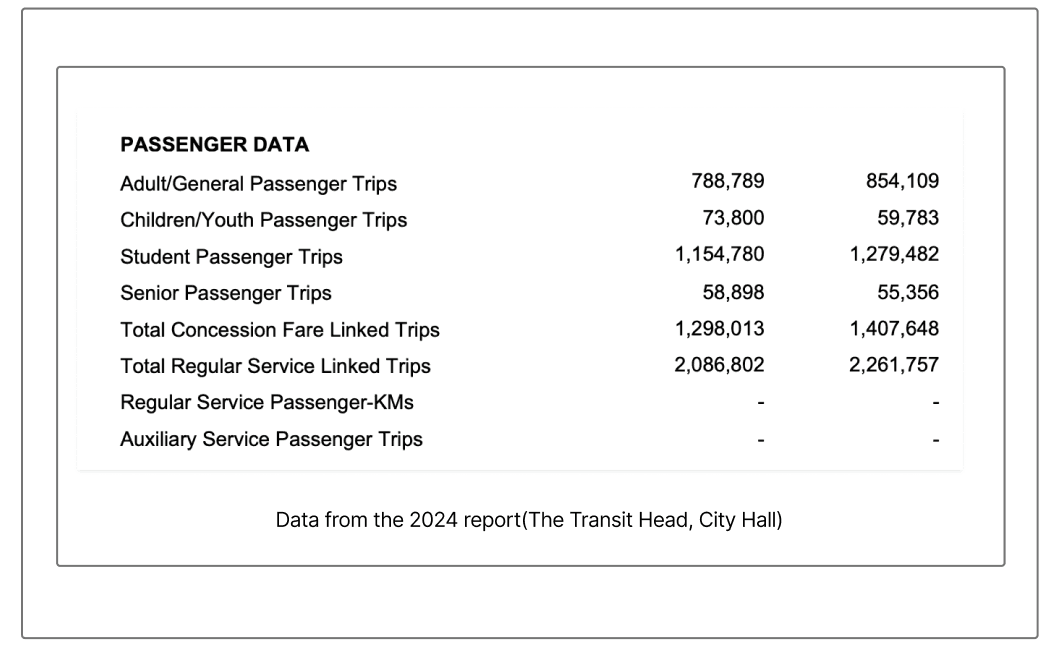


The Problem Statement
Commuters face confusion & delays. No real-time info makes navigation hard, especially for seniors & newcomers.
Process & Timeline

Phase 1: Discovery & Scoping
Conduct initial desk research to understand the domain.
Brainstorm core problems and identify key stakeholders.
Connect with stakeholders and define clear research goals.
Phase 2: Generative Research
Gather field notes and conduct field surveys to observe real-world context.
Synthesize early findings to narrow down and define the specific problem statement.
Observational data revealed a distinct behavioral split. While youth checked phones, seniors and newcomers entirely bypassed the static, clustered wall maps in favor of asking ticket booth staff.

Image created using Gemini Pro, using real insights recieved from field observations
Phase 3: Primary Research & Analysis
Recruit target participants for in-depth studies.
Conduct user interviews, contextual inquiries, and detailed surveys.
Analyze the qualitative and quantitative data to uncover actionable insights.
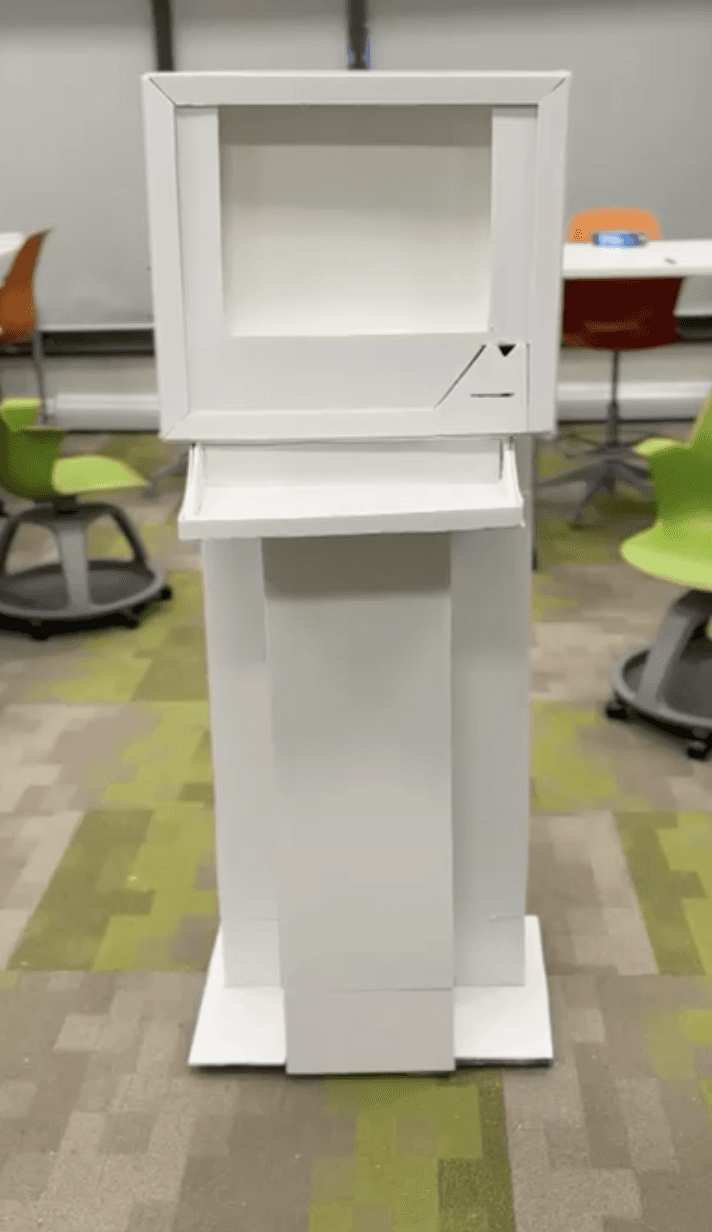
We also tested a low fidelity version of our prototype


Research Insights- Low & Mid Fidelity

Phase 4: Design & Validation
Build interactive prototypes based on research findings.
Conduct usability testing to validate and refine the design.
Synthesize final results for the final pitch presentation.
Phase 3 & 4 were conducted simultaneously where we would build low medium or high fidelity protoypes, test them out and go back to the drawing board.
Iterations
Based on user and stakeholder feedback collected during the previous phase, we optimized and iterated the overall solution during the medium-fidelity prototype stage.




Solution
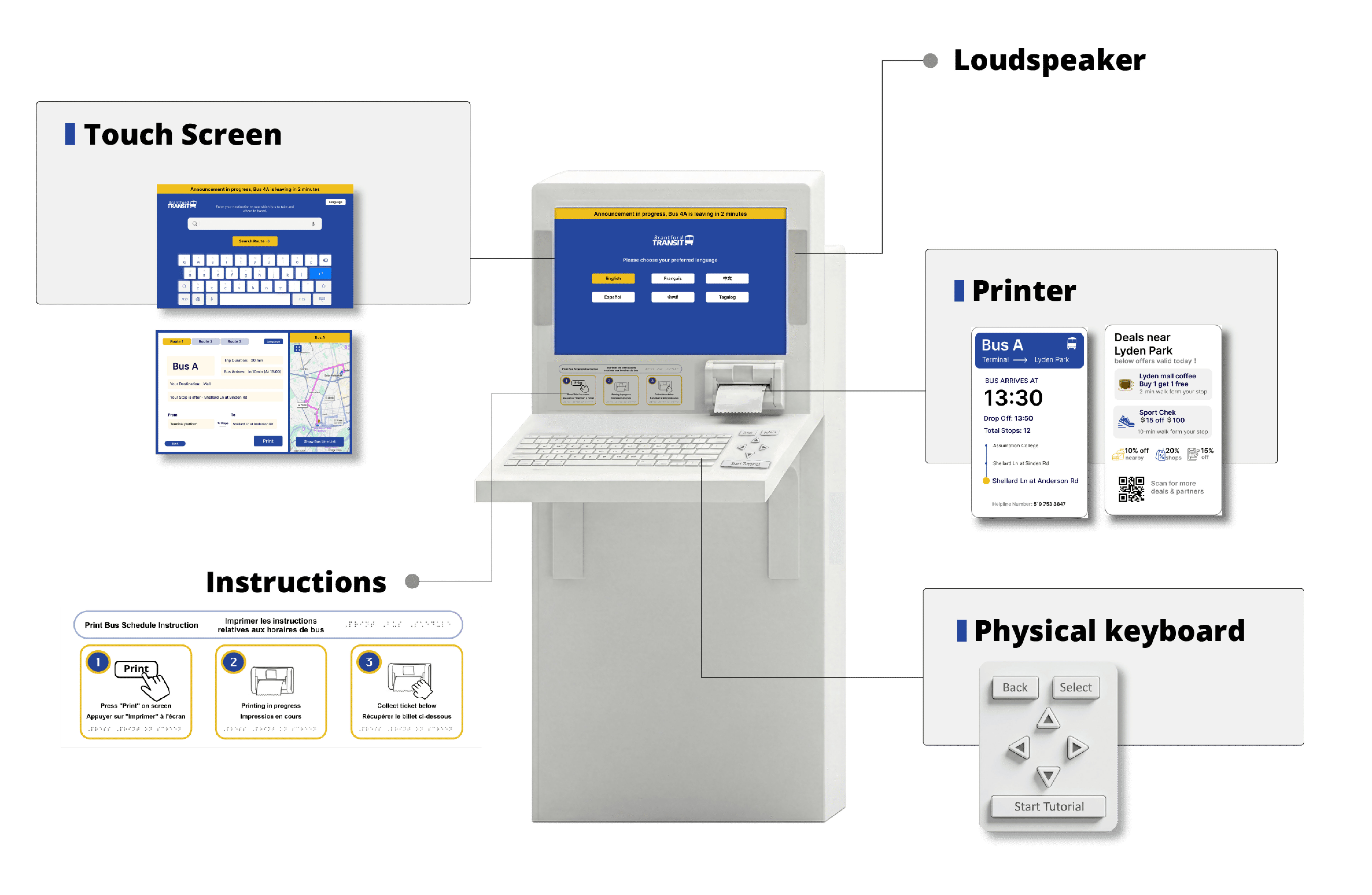
A Multimodal Phygital Kiosk To ensure the terminal is inclusive for all users—regardless of technical ability, language, or physical constraints—we designed a two-part system: a large display screen for real-time arrivals and an interactive kiosk for personalized wayfinding.
Multimodal Alerts (Audio & Visual): The physical kiosk is lined with an LED light strip that flashes red when a bus is arriving, while a built-in speaker simultaneously announces the arrival out loud. On the screen, the specific bus route map visually moves ahead to match the alert.
Cognitive & Visual Accessibility: The digital interface utilizes large fonts, high-contrast text, and a simplified layout to reduce cognitive overload, specifically targeting seniors and users who are not tech-savvy.
Voice-Activated & Multilingual: To assist newcomers and users with limited mobility, the kiosk supports multiple languages (including English, French, and Simplified Chinese) and features audio input so users can speak to the kiosk instead of typing.
Physical Handout Dispenser: Recognizing that not all users want a purely digital experience, the kiosk includes a dispenser that provides physical handouts detailing which bus they need to take to reach their destination.
Real-Time System Integration: Replaces static, unreliable printed schedules with real-time transit data, displaying live delays and route changes to reduce user anxiety during bad weather or at night.

Impact
Real-World Validation: Partnered with the Brantford Bus Terminal to deploy and test the kiosk live on-site, evaluating the hardware and interface in its actual environment.
Zero-Prompt Usability: Achieved a highly intuitive flow during final testing. A participant who self-identified as tech-averse and "hating technology" successfully completed the entire user journey without a single intervention or prompt from the researcher.
Client & Industry Recognition: The final phygital solution was highly praised by client stakeholders .
We won Bronze among 40 entries at the HCI Conference of Montreal for this project in 2026


